More companies now ask about sustainability before they ask about price. For example, some have ESG targets. Others, meanwhile, are aiming for green building ratings. And many simply want their office to reflect their values. So choosing between sustainable furniture suppliers in Hong Kong has become a real part of the buying process.
The trouble is that “eco-friendly” is easy to say and hard to check. So this guide covers what to ask and which claims to trust. It also shows products we supply that back up their claims.
What makes furniture sustainable?
There is no single answer. However, the strongest products usually do well on a few points.
- Recycled content. How much of the product comes from recycled material?
- Recyclability. Can you recycle it again at the end of its life?
- Durability. Will it last ten years or two? A product that lasts longer often has a lower impact overall.
- Healthy materials. Does it release harmful chemicals into the room?
- Waste in production. How much material does the factory throw away?
- Certification. Has an independent body checked the claims?
A product does not need to score perfectly on all six. But a good supplier should be able to answer each question clearly.
Questions to ask sustainable furniture suppliers in Hong Kong
Before you sign off a furniture order, then, ask your supplier these questions.
- Which certifications does this product have? Look for recognised schemes, not just a logo on a brochure.
- What is the recycled content, in numbers? “Contains recycled material” can mean almost anything.
- Is there a take-back programme? Some brands collect old products for recycling.
- Can parts be replaced? Replaceable cushions, covers or tiles extend the life of a product.
- Where is it made? Shipping distance matters, but so does the factory’s own energy use.
If the answers are vague, that tells you something too.
Examples of sustainable furniture and finishes we supply
For instance, here are brands that put real numbers behind their claims.
Echo Jazz: acoustic panels from recycled bottles
Echo Jazz makes acoustic panels, ceilings and dividers from EchoBoard. The board is 100% PET with at least 50% recycled content. One square metre of the 24 mm board uses around 70 recycled bottles.
In addition, the brand runs a take-back programme. The brand shreds old products and production offcuts, then reuses them. EchoBoard has earned several sustainability labels, including Cradle to Cradle Certified at Bronze level.
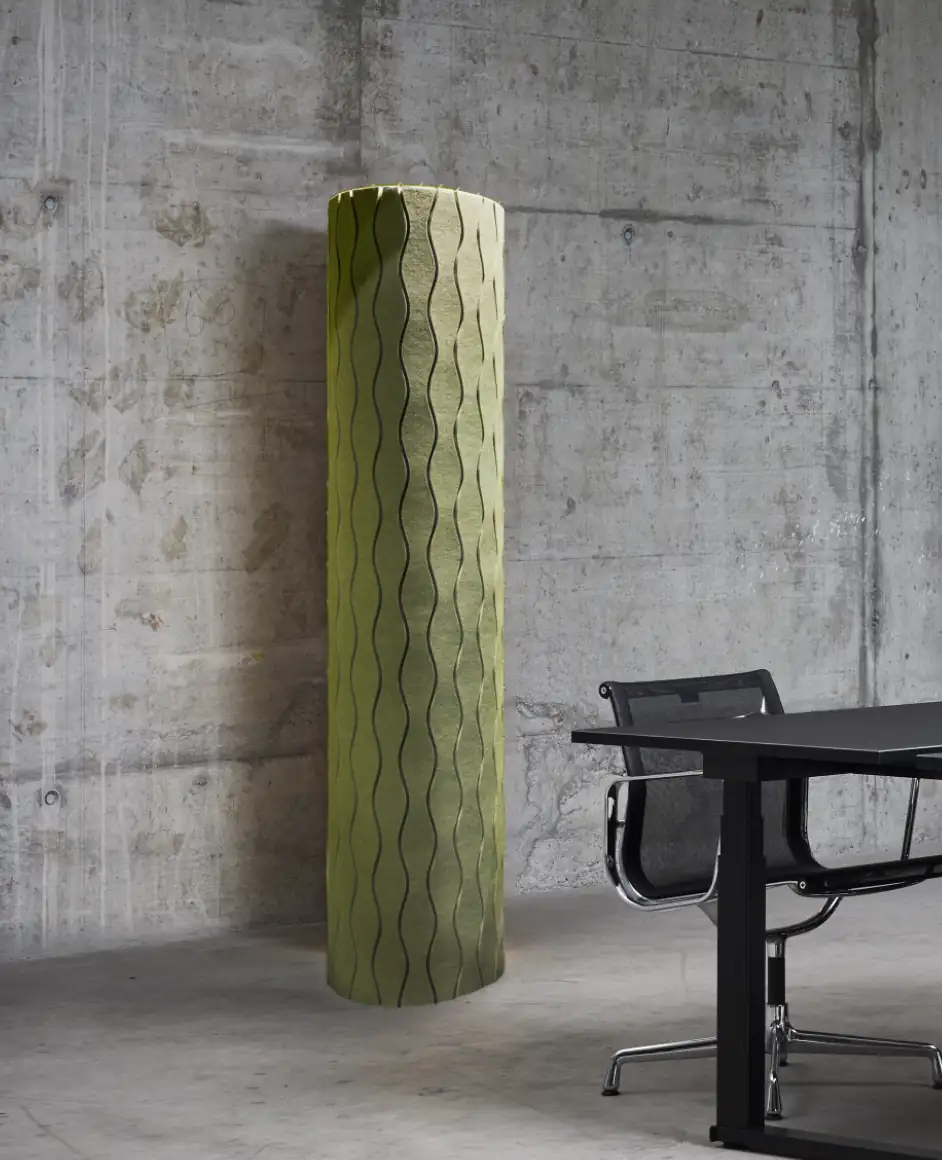
A good example is the ECHOTOWER ROUND, an acoustic column cut from a single piece of EchoBoard. You can read more in our guide to acoustic wall panels in Hong Kong.
Carpets Inter: recycled carpet backing
Most carpet tiles use a heavy backing. That is where much of the environmental impact sits. Carpets Inter has worked on this for years.
Its EcoSoft backing uses recycled PET bottles and contains no PVC. The company says it has diverted hundreds of millions of bottles from waste so far. Its EcoSquare backing also uses a high share of recycled content.
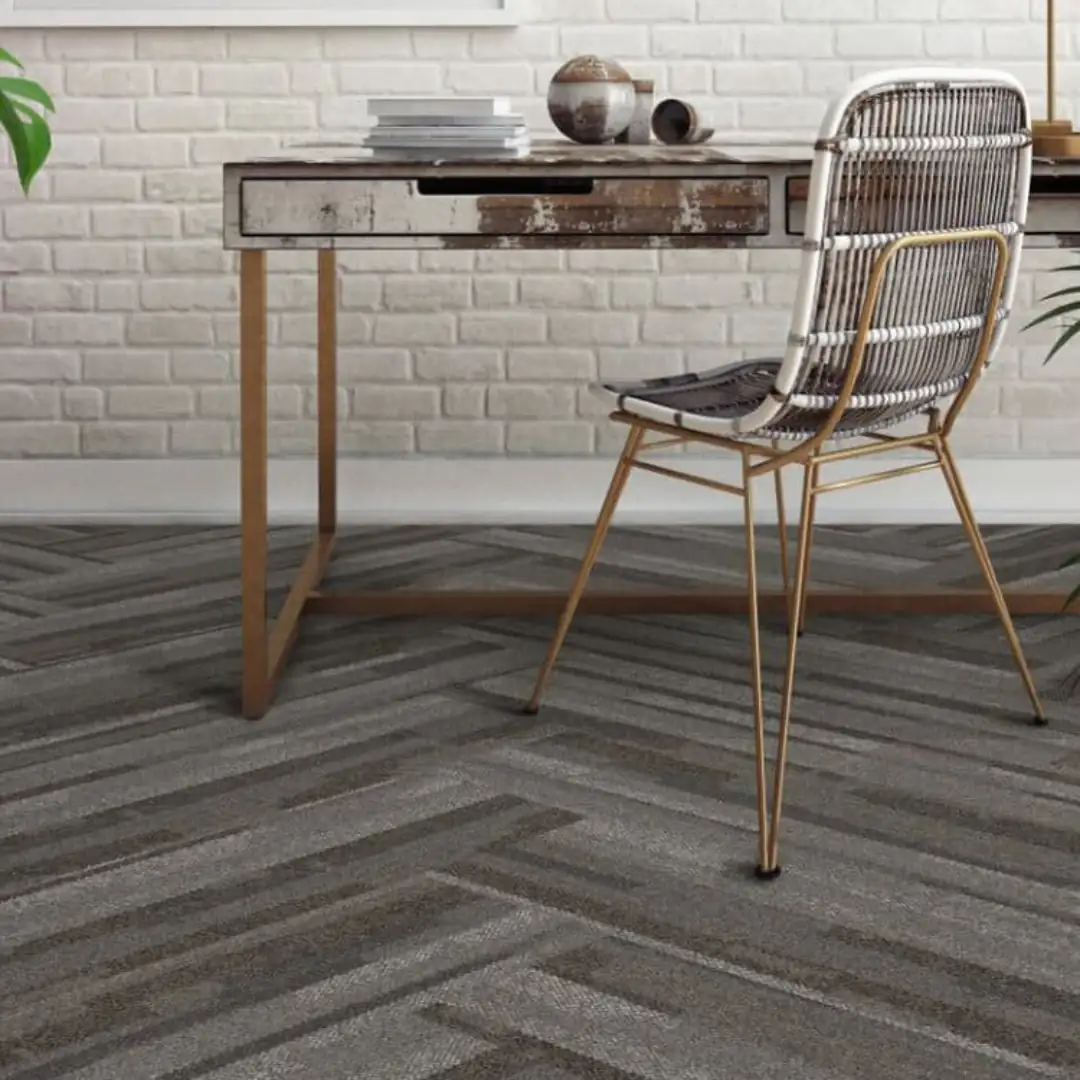
Specific collections push this further. Reuso uses every square inch it produces, so less material goes to waste. Upstream is part of the brand’s work on keeping plastic out of the ocean. And Breathe uses the EcoSquare backing. Modular tiles also help on their own, because you can replace one worn tile instead of a whole floor.
CS Rugs: natural fibres and long life
Natural materials, then, are another route. CS Rugs works mostly with wool, linen and silk. Sauvage, for example, is 100% New Zealand wool. A well-made wool rug can last for many years with basic care, which keeps it out of landfill.
We cover the range in more detail in our guide to custom rugs in Hong Kong.
Durability is the most overlooked factor
Recycled content gets most of the attention. However, how long a product lasts often matters just as much. A cheap chair that breaks in two years and goes to landfill is rarely the greener choice.
So look at warranties, spare parts and repair options. Ask whether covers can be changed when you rebrand. Also ask whether the product can be moved and rebuilt when you change offices. In Hong Kong, where companies relocate often, that point matters a lot.
Office pods are a good example. A freestanding pod can move with you, while a built room stays behind.
Sustainable choices that also save money
Sustainable furniture and lower costs are not always in conflict. For example, modular carpet tiles reduce replacement costs. Freestanding furniture avoids demolition when you move. And durable pieces mean fewer orders over the life of a lease.
In short, the greenest option is often the one you will not need to replace.
Work with us on sustainable furniture for your fit-out
We can share product data and certification details from our brands on request. You can browse our full product range and see the brands we work with on our brands page. Also, look at past work on our projects page.
If you are working toward a sustainability target, contact our team. We can suggest products that fit your goals and your budget. You can also learn more directly from Echo Jazz, Carpets Inter and CS Rugs.