At first glance, lecture halls have a simple job. Students need a place to sit, a surface to write on and a clear view of the front. Swing-away seating does all three in a very compact footprint. That is also why so many universities and training centres choose it.
In this guide, we explain how swing-away seating works, where it fits best, and how it compares with other options. We supply these systems in Hong Kong through Sedia Systems.
What is swing-away seating?
With swing-away seating, each chair sits on an arm fixed to the floor or the desk pedestal. The chair swings out so a person can sit, then swings back under the desk. Because the chair is attached, rows stay neat and aisles stay clear.
The desk in front is fixed too. So students get a full writing surface for laptops, books and notes. That is a big step up from a small tablet arm.
Why lecture halls choose swing-away seating
In practice, there are a few clear benefits.
- More seats in the same room. Fixed chairs and desks use space efficiently.
- Tidy rows every day. Chairs cannot drift or block the aisle.
- Better work surface. A full desk suits laptops and exams.
- Less wear and noise. There is no dragging of chairs across the floor.
- Easy cleaning. Fixed layouts make it simple to clean between classes.
However, swing-away seating is a long-term choice. The rows are fixed, so it suits rooms with a stable layout. If the room changes often, a flexible option may work better.
Swing-away seating from Sedia Systems
The M60 Swing Away is Sedia Systems’ fixed lecture hall system. It can take a wide range of seat styles, including the Gnosi, Turandot, Ply, Tecton and Cinto seats. So you can match the chair to your comfort needs and budget.
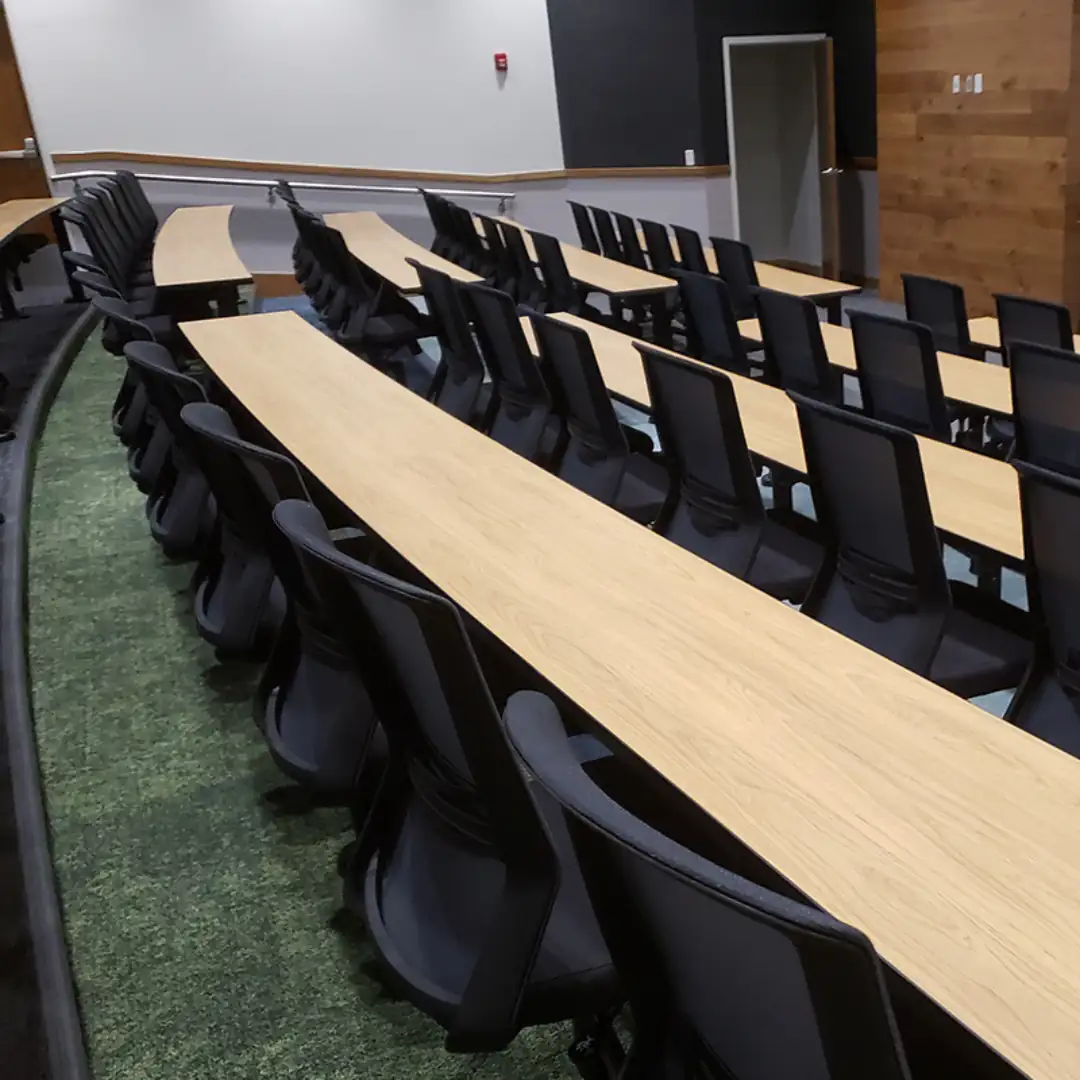
The finishes are also flexible. Writing surfaces come in laminate or wood. Modesty panels come in laminate, wood, metal, acrylic or felt. And the pedestal comes in several colours, from silver to charcoal.
Other lecture hall seating options
Still, swing-away seating is not the only answer. Here are the main alternatives we offer.
Fixed tables with loose or mobile chairs
The M50 Fixed Table suits higher education and corporate learning rooms. It adapts to many layouts, and you can pair it with a range of chairs. As a result, it gives more flexibility than a fully fixed system.
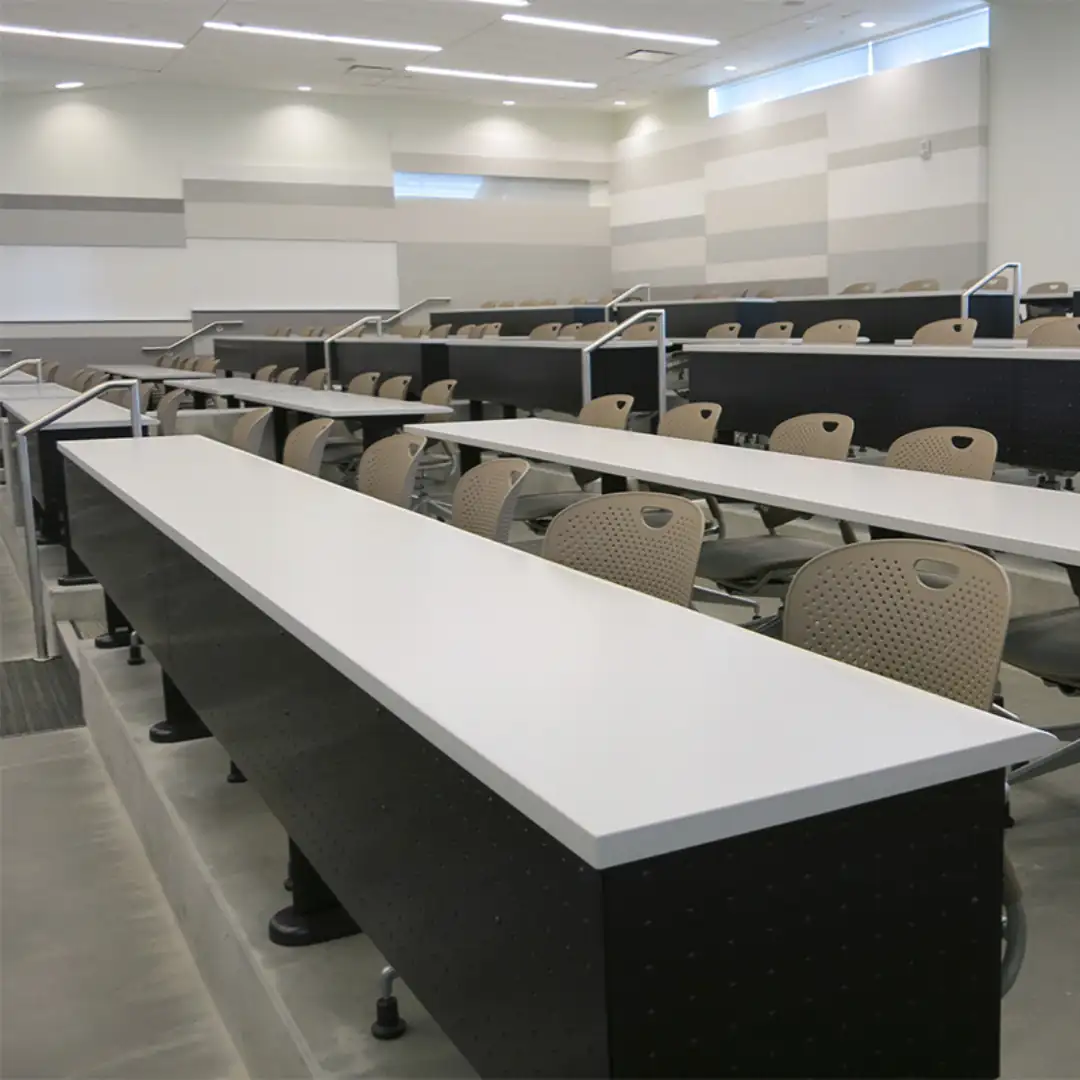
Pedestal-mounted seating
The Jury Series offers pedestal-mounted seats for training rooms, auditoriums and courtrooms. So it works well where you want fixed seats with a cleaner look.
Auditorium chairs with tablet arms
For rooms that host both lectures and events, a tablet-arm chair can be enough. The FT20, for example, has an optional tablet arm that opens and stows in one motion. We compare more models in our guide to auditorium chairs.
Beam seating
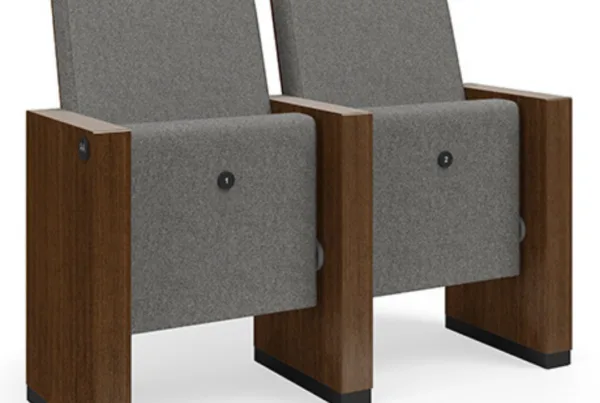
Finally, for waiting areas and some teaching spaces, the Beam Series offers two-, three- or four-seat sections. It also offers options such as tablets and numbered seats.
Planning swing-away seating for your room
First, a good layout starts with accurate drawings. Then we look at a few key points.
- Row spacing. This sets comfort, legroom and the number of seats.
- Floor type. Flat, sloped and tiered floors each need a different fixing method.
- Power and data. Most lecture halls now need sockets at every seat or every few seats.
- Sightlines. Every student should see the screen and the speaker clearly.
- Access. Aisles, exits and wheelchair spaces must meet building and fire rules.
Also think about the chair itself. After all, students may sit for two or three hours, so comfort matters more than many people expect.
Talk to us about swing-away seating
You can browse our auditorium seating and training ranges online. For multipurpose halls, read our guide to retractable seating.
When you have a floor plan, contact our team. We can suggest a layout and seat options that suit your room. You can also visit Sedia Systems for more on the range.