Many Hong Kong offices look great but sound terrible. Glass walls, concrete ceilings and stone floors reflect every voice. So a meeting room for six can sound like a canteen. Acoustic wall panels in Hong Kong offices, restaurants and classrooms are one of the simplest ways to fix that.
We supply acoustic products from Echo Jazz, a Swiss brand that makes panels, baffles, dividers and lights from recycled PET. This guide explains how acoustic panels work, where to put them and which designs suit different rooms.
Why rooms echo
First, sound bounces off hard surfaces. In a room with lots of glass and concrete, it keeps bouncing for a while before it fades. That lingering sound is called reverberation.
Too much of it, however, makes speech hard to follow. People raise their voices, which makes the room louder still. On video calls, the microphone picks up the echo too. As a result, everyone on the other end struggles to hear.
Acoustic panels absorb part of that sound instead of reflecting it. The room becomes calmer and clearer, even with the same number of people in it.
How acoustic wall panels work
Most acoustic panels are made from soft, porous material. When sound waves hit the surface, some of the energy turns into a tiny amount of heat inside the fibres. Less sound comes back into the room.
Thickness also matters. Thicker panels usually absorb a wider range of sounds, including lower voices. Placement matters too, so think about where people actually talk. Panels near where people sit and talk often do more than panels high up on a wall.
Echo Jazz builds most of its range from EchoBoard. It is a felt-like acoustic board made from PET with at least 50% recycled content. Each square metre of the 24 mm board contains around 70 recycled bottles. It comes in 12 mm and 24 mm versions and many colours.
Acoustic wall panels for different rooms
Of course, different rooms need different solutions. Here are the products we recommend most often.
Meeting rooms and boardrooms
Meeting rooms, for example, are often small and full of glass. A few well-placed panels on the solid walls can make a big difference.
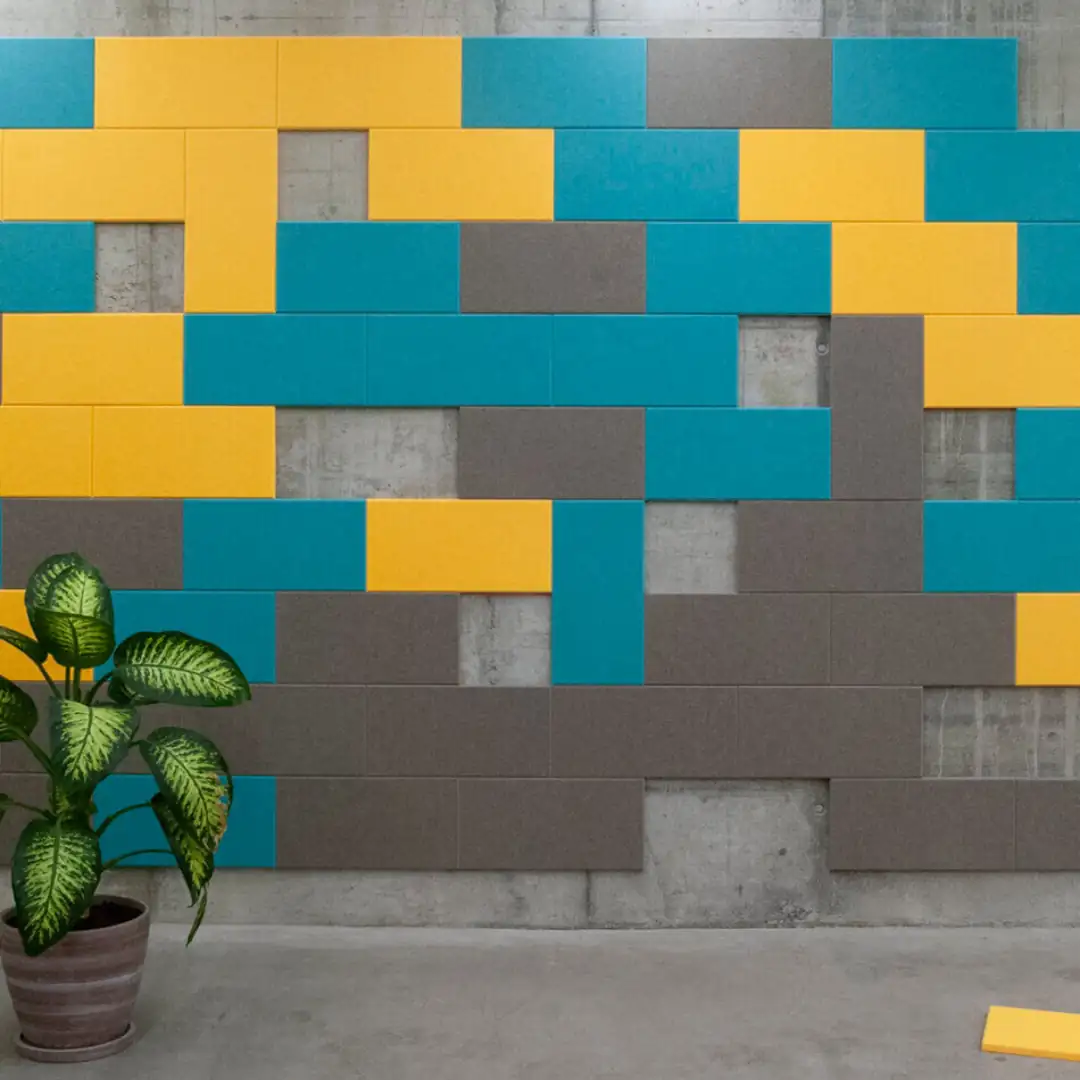
ECHOBRICK works like a mosaic. You arrange the tiles in your own pattern. So the wall becomes a design feature too. It is a good choice when you want colour or branding.
Open offices and reception areas
Large open spaces, on the other hand, need more absorption. ECHOBAFFLE WALL uses three-dimensional slats that seem to move as you walk past. It adds a lot of surface area, so it absorbs more sound than a flat panel of the same size.
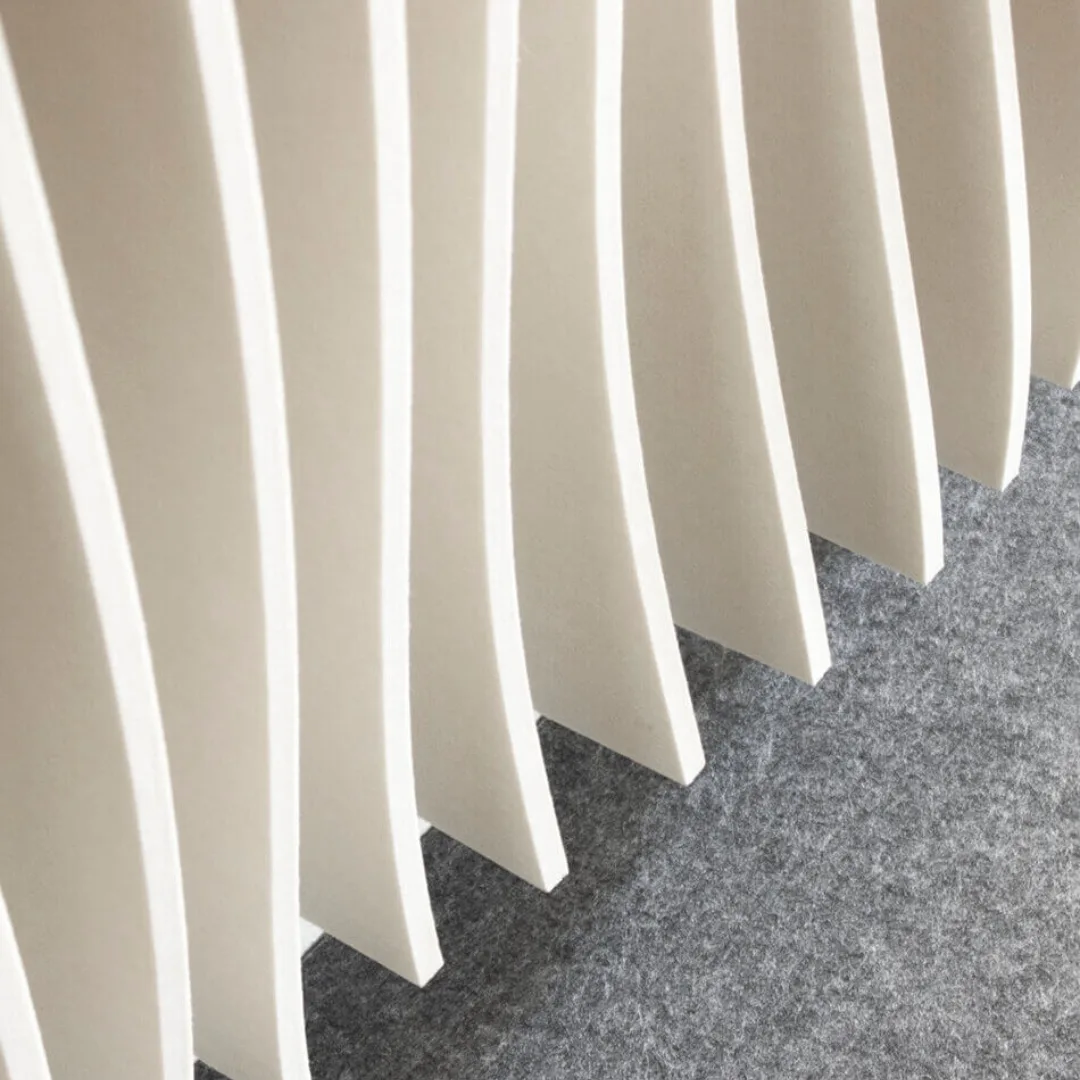
For a more textured look, EchoLoom is another wall option. We wrote about it in our EchoLoom post. EchoCoustic ACCENT uses V-shaped cuts to create line patterns, which suits modern, minimal interiors.
Restaurants and cafés
Restaurants in Hong Kong are often packed and loud, so acoustic wall panels alone may not be enough. Also, many owners do not want panels that look technical. In that case, a mix of wall panels and ceiling products works well.
The ECHOSAIL ceiling sail and the ECHOBAFFLE hanging baffles treat the ceiling without changing the walls. For extra absorption on the floor, the ECHOTOWER ROUND is a freestanding acoustic column. It can stand in a corner or between tables.
Classrooms and training rooms
In classrooms, clear speech matters most. So we usually combine wall panels at ear height with a treated ceiling. Products like EchoNote help too. It is a large magnetic whiteboard with an acoustic surface on the back, so it doubles as a divider.
Wall, ceiling or divider?
Walls are often the easiest place to start, since they are close to people. Installation is also quick. That said, the ceiling is usually the biggest hard surface in a room. In open offices, treating it can have the biggest effect.
Dividers add a third option. ECHOCURTAIN hangs from the ceiling and splits a space without building a wall. ECHOCOVE ECO panels plug together without tools, so you can change the layout later. We covered the newer Paling version in our EchoCove Paling post.
In practice, the best results come from combining two or three of these. We can suggest a mix once we see the room.
Tips before you install acoustic panels
- Start with the worst room. Fix the loudest meeting room first and listen to the difference.
- Spread panels around. Several smaller panels on different walls often work better than one large one.
- Think about colour early. EchoBoard comes in many colours, so it can match your brand.
- Check fire requirements. Ask your fit-out contractor what your building needs.
- Do not forget the ceiling. In open offices, it is often the most effective place to treat.
Get help with acoustic wall panels in Hong Kong
You can browse our full acoustic range and wall covering products online. To learn more about the maker, visit Echo Jazz.
If you have a noisy room, send us a few photos and the room size. We will suggest panels and placement that fit your space and budget.